| Gary Kildall - CP/M, Digital Research and GEM |
| Written by Harry Fairhead | ||||||
Page 2 of 2

Missed opportunityGiven that CP/M was the defacto operating system for the 8-bit microcomputer world why do we now mostly use operating systems from Microsoft? This is the next strange part of the story. DR did develop other products over the time and Kildall was involved in many of them - particularly DR Logo for CP/M and later the PC. Kildall may have made a good move in producing CP/M but it was mostly a spin-off from other interests. He wasn't a microcomputer enthusiast and this showed in his subsequent projects. For example, when people at the Lawrence Livermore Labs (a hot bed of enthusiasts!) suggested that he implemented a BASIC for a microcomputer he replied that it was "a stupid idea". The reason was that he still thought of microprocessors as of use only in washing machines and other embedded systems. Of course Paul Allen and Bill Gates knew otherwise and went on to write just such a BASIC interpreter. As an interesting side light Gordon Eubanks, the implementer of CBASIC the only real alternative to Microsoft BASIC, was a thesis student of Kildall's.
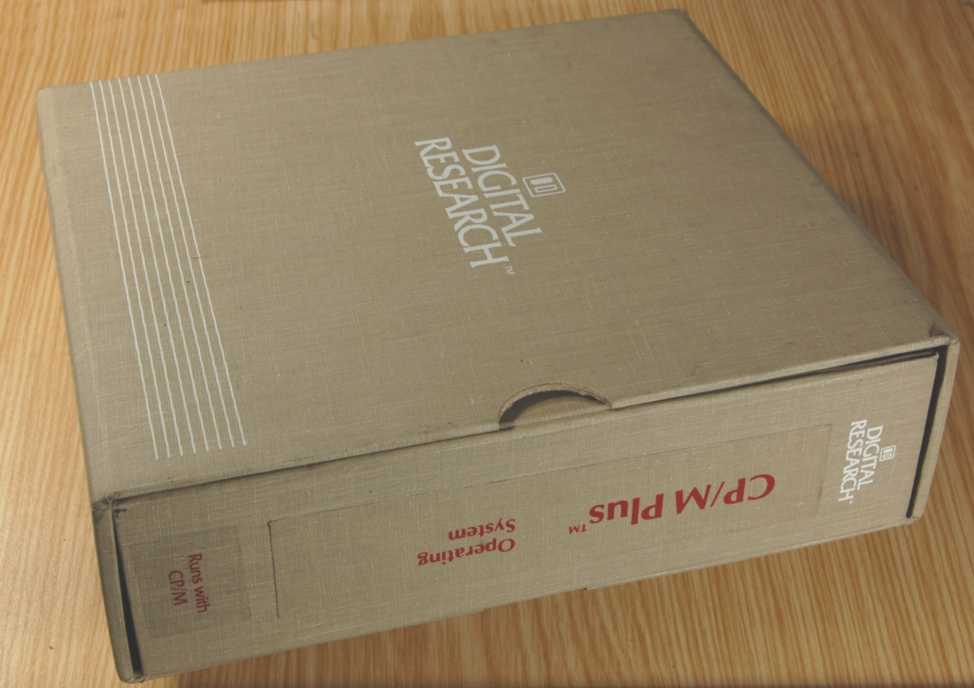
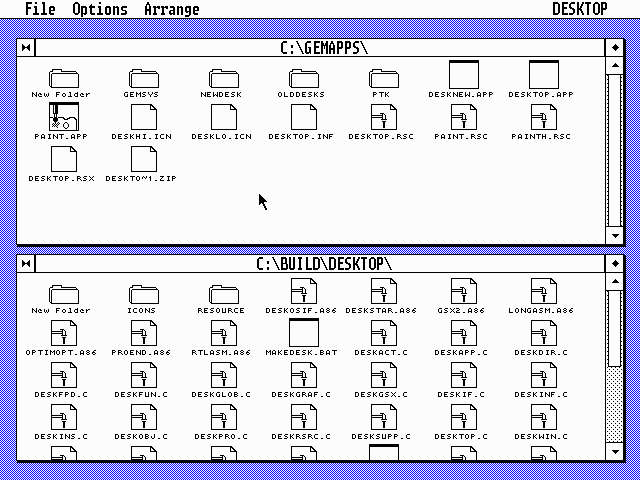
CP/M Plus - nearly the last of the line If the first most important event in Kildall's career was more of an accident than planned then the second certainly was. It is an apocryphal story that has been told, denied and retold and who knows if it is true or false, but on the basis of the facts and Kildall's known interests it seems reasonable. As well as taking a delight in programming Kildall enjoyed technology - he owned fast and expensive cars and a Pitts special stunt bi-plane. Just like most programmers he liked to fiddle with technological toys and just get away from the strains of managing DR, which had now become an established company. The key time was when IBM were putting together their wholly unremarkable machine the IBM PC. They had contracted Bill Gates to provide BASIC in ROM and were in the process of signing up DR to provide the operating system in the form of CP/M 86 - a more or less straight port of what now had to be renamed CP/M 80 to make clear the difference. Now we come to the part of the tale that is unclear. The rumor was that on the day that the IBM people wanted to see Kildall to close the deal he was missing and not contactable. The story usually told that he was flying his favorite plane but I have heard a version that says that he was on his ocean-going yacht. It doesn't really matter what he was doing, though it adds spice to the story to think that he was looping the loop at the time that men in blue suits wanted to close the deal, he was missing. Rumor also has it that IBM, almost in a fit of pique, fell into the waiting arms of Bill Gates and Microsoft, who of course promised an operating system as good or better than CP/M even though they didn't have one, had never written one and had no experience in the field at all. How Microsoft managed to actually produce MS-DOS is another, equally strange, story but it is enough to say that they did and DR never really got over the blow. After the MS-DOS fiasco DR spent most of its time trying to catch up with or outflank Microsoft. In the operating system field where DR made most of its income progress was slow. CP/M remained largely unchanged over the years and was very slow to incorporate features that allowed it to handle hard disks. It did produce a more advanced multi-user operating system called M/PM which grew into Concurrent DOS and provided the basis for DR-DOS, an operating system that enjoyed a degree of success as a third party operating system alternative to MS-DOS, but this was all UK based R&D and Kildall seems to have had little to do with it. DR even tried to outdo Microsoft with the first GUI for the PC, GEM. This was an excellent system but again, once it was produced it remained static, then developed in fits and starts so that no one really knew what the current version was. in 1991 DR was taken over by Novell, primarily for Novell to gain access to the OS line of products.
GEM A Graphical Operating System That Was Way Ahead Of Windows - At First.
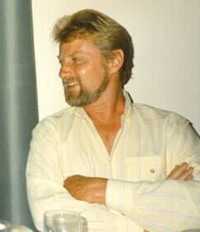
Kildall remained active in the area of CD-ROM forming the Activenture company in 1984 to work on projects such as converting Grolier's Encyclopedia into what we would now call a multi-media production. Gary Kildall died after a blow to the head during a biker brawl at a bar in Monterey, aged 52, but the exact circumstances of the injury have never been entirely clear. His final business venture before his premature death in 1994 was to develop a home PBX system which integrated land-line telephones with mobile phones. He also appeared regularly on TV, co-hosting Computer Chronicles, and remained an authority on the computer business. I also suspect that he retained delight in programming and expensive technological toys, despite everything.
In 1995, the year after his untimely death, a special edition of Computer Chronicles was devoted to Gary Kildall's story. Introduced by Stewart Cheifet it includes comments by Tom Rolander who was the first employee of Digital Research; Alan Cooper, a CP/M applications developers; as well as Gordon Eubanks and others.
In 2014 an IEEE Milestone plaque was installed outside the former Digital Research headquarters at 801 Lighthouse Avenue, Pacific Grove, Californina to commemorate the 40th anniversary of the birth of CP/M in 1974. More InformationRelated ArticlesIEEE Honors Gary Kildall With Plaque Software From The 80s Running In Your Browser The SWTP Effect - How The Microcomputer Revolution Started In The UK The UK 1970s Big Board Computers 30th Anniversary of the First Portable Computer 30 years ago - Microsoft signs contract with IBM to create MS-DOS
To be informed about new articles on I Programmer, sign up for our weekly newsletter, subscribe to the RSS feed and follow us on Twitter, Facebook or Linkedin.
<ASIN:0465029906> <ASIN:0307275175> <ASIN:0887308554> <ASIN:3822812935>
|
||||||
| Last Updated ( Friday, 01 April 2022 ) |