| Altair - The First PC |
| Written by Harry Fairhead | ||||
Page 2 of 3
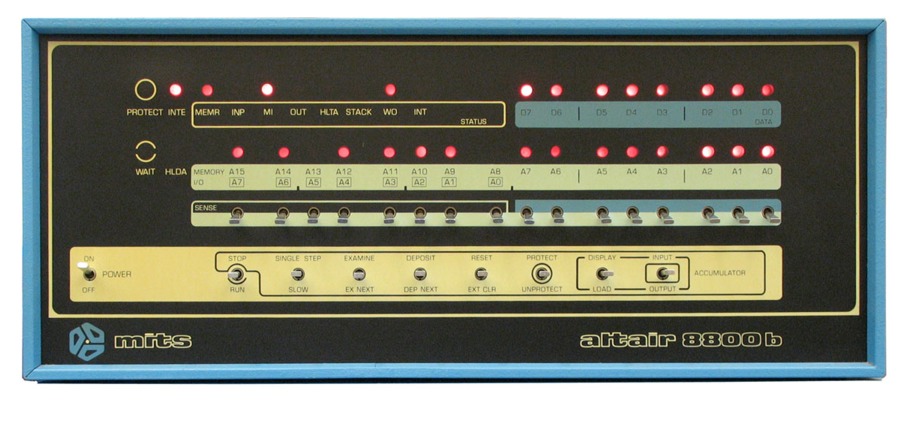
The case that the electronics were packed into was just a rectangular box, but it did have the necessary array of flashing LEDs and key switches!
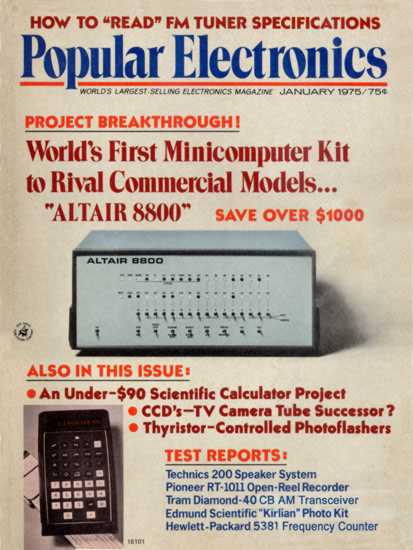
At that time the popular conception of a computer involved banks of flashing lights and switches but the need for them in this case was far from cosmetic. The problem was that there were no suitable I/O devices for this early personal computer. The only way that it could be programmed was via the switches. You had to key in the binary code of each instruction in turn and when you ran your program the output was via the pattern of LEDs on the front panel. It is difficult to believe that keyboards and video displays were just too expensive - but they were! When you are selling a dream for $500 you need a good name to make sure that your audience's imagination is captured. David Bunnell, a MITS technical writer, suggested calling the machine "Big Brother". It is probably a good job that his suggestion wasn't taken up! Enter Popular ElectronicsThe next stage in the development of the machine could have been the most important of all. Les Solomon, the editor of Popular Electronics magazine had been on the lookout for a computer project for some time and he heard rumors of Ed Roberts' plan. This sounded like a project that was good enough for the cover! Solomon flew to Albuquerque to talk to Roberts and arranged for it to feature in the January issue - as long as the design was completed in time. About the only thing he didn't like about the project was its name. Back in New York he spent hours trying to think up a good name and then he asked his 12 year old daughter. She was watching Star Trek at the time - then a new series - and so she suggested Altair, the star system that the Enterprise was heading for. As Roberts was a sci-fi fan he liked the name because it was also the planet in the classic sci-fi film Forbidden Planet (the one with Robbie the Robot in it!) That settled it - the new machine was christened the Altair 8800. 
The first prototype was completed in time for the January 1975 issue of Popular Electronics and Roberts packed it up and shipped it off to New York. It didn't arrive. The first personal computer, a term coined by Roberts, was lost in the post! Les Solomon, like any good magazine editor, was in a panic. Without the time available to build a second prototype the photograph on the cover of the magazine had to be an empty metal case!
Popular Electronics The machine that the article described was feeble to say the least. The memory consisted of 256 Bytes and this was probably all that could be used given that programs had to be loaded by setting switches. To tantalise the reader the promise of adding more memory via expansion cards to a "massive" 4KBytes was made - at the time the memory cards didn't exist and it took rather a long time for MITS to produce them. Even so the magazine article did capture the readers' imagination. The day it appeared Roberts received five phone calls, the next day nine and by the end of the week the average was 25 per day. Very soon the company that was so close to failure was worth a quarter of a million dollars and was growing. Again it is difficult to imagine what all those people were doing with such a limited computer but it lit the fire. Computer home brew clubs sprang up all over the country but particularly in California. MITS, even with its name changed to Micro Instrumentation Telemetry Systems, was quite unprepared for the success. They simply couldn't meet the frantic demand. Customers often waited more than the 60 day delivery promise. Some customers even camped outside waiting for their machine. The demand, and MITS inability to meet it, soon brought the clone manufactures on the scene. Yes, even the first personal computer was cloned with firms such as IMSI and Cromemco making 8080 and later Z80 clones of the Altair. Other companies, notably South West Technical Products, produced alternative products based on the 6800 processor. Even so the inspiration came from MITS and the Altair.
A late model Altair complete with 8 inch disk drive below <ASIN:0262681374> <ASIN:0262532034>
|
||||
| Last Updated ( Tuesday, 01 February 2022 ) |