| Face Recognition Applied to Portraits |
| Written by David Conrad | |||
| Saturday, 28 April 2012 | |||
|
Face recognition techniques usually come with a certain amount of controversy. A new application, however, is unlikely to trigger any privacy concerns because all of the subjects are long dead. Before photography took over, oil painting and portraiture was used to record what important people looked like. As a result for every artistically important painting there are a lot of "instant snaps" that fill museums and art gallery vaults. What would make these paintings much more valuable is knowing who all of the people in the portraits are. The solution might be to apply face recognition software. This is the project for which three University of California, Riverside researchers have just received funding. FACES: Faces, Art, and Computerized Evaluation Systems will attempt to apply the sort of face recognition software we all love to hate to recognize the people in portraits. To quote Conrad Rudolph, professor of art history and project director: “Almost every portrait painted before the 19th century was of a person of some importance. As families fell on hard times, many of these portraits were sold and the identities of these subjects were lost. The question we hope to answer is, can we restore these identities?” The problem is a tough one as working from a portrait, or even from a sculpture, introduces new types of distortion that the software will have to cope with. There is the whole question of artistic interpretation to build into the system.
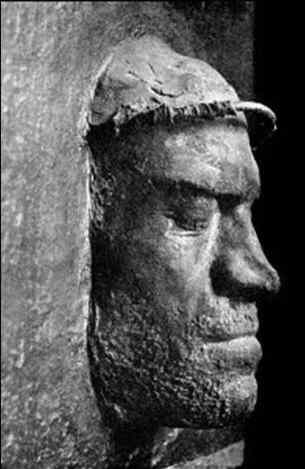
Death mask of 15th-century Italian statesman Initially the work will start from death masks of well known individuals and attempt to find them in known and unknown portraits.
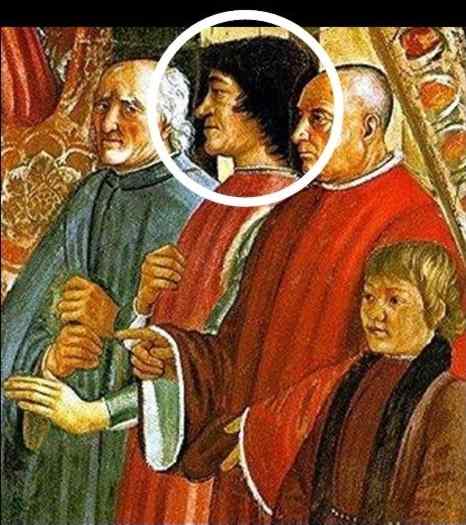
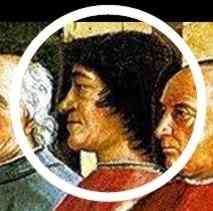
Lorenzo de' Medici is circled in this image part of a much larger 1485 fresco. You might well ask why humans couldn't do the same job and the simple answer is that they probably could, but the result would still be subjective. A facial recognition program could also put a confidence interval on the identification, something that would please academic historians. If the algorithm can be fine tuned we can look forward to the digitized collections of museums and art galleries around the world suddenly yielding a who-knew-who social network graph that could put more science, and computer science at that, into history.
More informationScholars to Apply Facial Recognition Software to Unidentified Portrait Subjects Related ArticlesFace Recognition Adds Age Estimation Image Processing Reveals the Young Leonardo CV Dazzle - how to hide from face recognition
Comments
or email your comment to: comments@i-programmer.info
To be informed about new articles on I Programmer, subscribe to the RSS feed, follow us on Google+, Twitter, Linkedin or Facebook or sign up for our weekly newsletter.

|
|||
| Last Updated ( Saturday, 28 April 2012 ) |