| Program a Telenoid - Telepresence on a budget |
| Sunday, 24 October 2010 | |||
|
A robot with a small body might be the future for telepresence - the technology that can make you be somewhere without having to travel to the location. See how you respond to this latest Japanese innovation. 
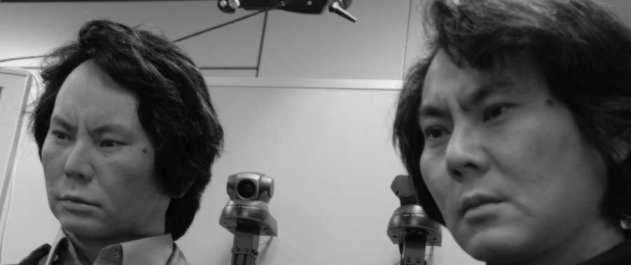
Telenoid is the latest telepresence robot from Osaka University and Dr. Hiroshi Ishiguro, better known for the spooky Geminoid telepresence device. Telepresence works by using an audio and video link to allow a user to see and be seen at a remote location. The difference between telepresence and a simple video conference facility is that an additional channel of data is use to animate a robot giving the impression that an additional human really is at the remote location.In the cas of Geminoid for example, the robot provides appropriate facial expressions and movements.
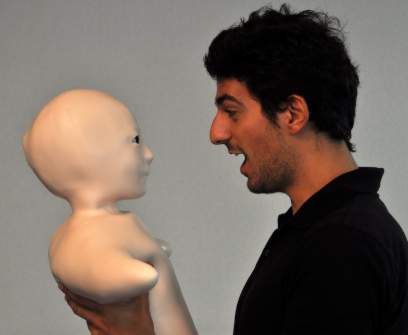
Unlike Geminoid, Telenoid doesn't make the attempt to be a realistic human being. It's a portable minimalistic human form but with enough movement and degrees of freedom to capture much of the interaction that occurs between humans. The advantages of being minimalistic are that you don't need so many servo mechanims - 9 compared to Geminoid's 50 - to make the device move. It has short stubby limbs and an unrealistic face, but these features might also be an advantage.
The small body makes the device appear both male and female and both young and old. Users seem to respond well to the device once they get used to its ghost like appearance.It seems that behavior is as important in telepresence as form - but see what you think after looking at the demo video
The device is available in two versions - advanced at around $30,000 and basic at around $8000. More information from: http://www.irc.atr.jp/Geminoid/Telenoid-overview.html http://www.irc.atr.jp/Geminoid/overview.html
|
|||
| Last Updated ( Sunday, 28 May 2023 ) |