| Google to start charging for Prediction API |
| Sunday, 09 January 2011 | |||
|
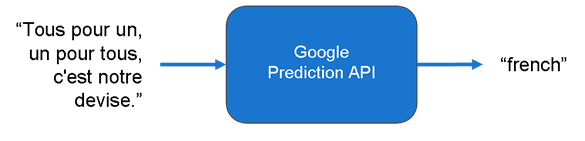
The Prediction API gives developers access to Google's own machine learning algorithms to analyze data and predict outcomes. The service is free for up to six months depending on usage.

The Google Prediction AI provides access to Google's AI tools that it uses internally for a range of classification and prediction tasks. It basically is a REST style API to a general purpose pattern recognition engine. You can upload some data, which can be unstructured text or numeric, to Google Storage for Developers. You then perform a supervised learning stage and finally you can use the trained model to classify new data. For more detailed information on the API see: Google gets into AI with an API
Until recently it has been in a closed beta and essentially getting to use it was by invitation only. Now it looks as if a paid for service is the next step. It currently still isn't clear if Google are going to throw the service open to all - at the moment you still have to apply for access. The service will be free to users for six months or until the they reach a cap of 20,000 predictions - whichever comes first. Free accounts will also be limited to 100 queries and 5MB trained per day.After the free period Google will charge:
You can monitor your use of the service and configure it via the Google API console. The bottom line seems to be that there is a profit to be made from AI - well there is at least for Google. More informationhttp://code.google.com/apis/predict/ Google gets into AI with an API
|
|||
| Last Updated ( Monday, 10 January 2011 ) |