| Robots As Dancers - The Nao Dance Troupe |
| Written by Lucy Black |
| Sunday, 03 March 2013 |
|
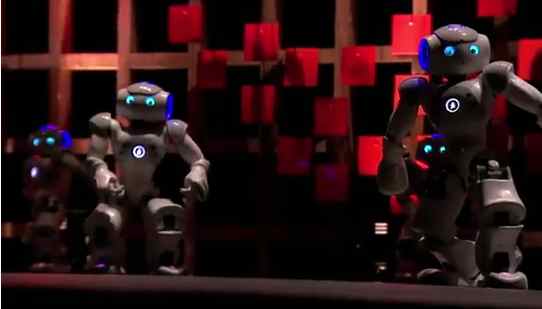
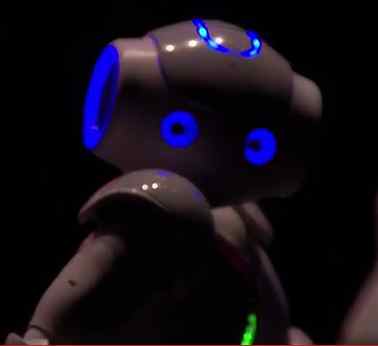
The power of the human form seems to have the ability to captivate us even when its only a few inches tall and very clearly a machine. Is there anything more than amusement in a troupe of dancing robots?
Bruno Maisonnier, boss of Aldebaran Robotics, has something that we all envy. As well as a company manufacturing the cutest robot on the planet, he also has access to as many of them as he wants. In his recent TED talk he took advantage of his good fortune to place a troupe of pre-programmed Naos on the stage and indulge us all with a three minute performance - watch:
What can be said? Well it is a strange mixture of impressive and not quite there yet. The robots move well but slowly and it isn't quite solid enough a performance to be convincing as an artistic experience. There are moments when the robots do something that makes you think - "that's clever" - but at no point do you think that they have the even 1% of the agility of a trained dancer. However, give them a few more years of development and you might be asking the question of why bother with a trained human dancer at all. Why not just feed the choreography straight into the robots and cut out the pain of the professional dancer? The same can be said of most other performance arts, such as playing an instrument. Why bother spending years mastering the cello when a robot virtuoso can do much better?
More InformationRelated ArticlesWalking With Robots - The Robot App Store Next Generation ASIMO lighter, faster, stronger
To be informed about new articles on I Programmer, install the I Programmer Toolbar, subscribe to the RSS feed, follow us on, Twitter, Facebook, Google+ or Linkedin, or sign up for our weekly newsletter.
Comments
or email your comment to: comments@i-programmer.info

|
| Last Updated ( Sunday, 03 March 2013 ) |