//No Comment - Kinect for X-Rays, Kinect as a Baby Monitor & Full Body Motion Tracking With HoloLens
Written by Lucy Black
Friday, 20 January 2017
The whole subject of depth cameras has more or less dropped out of sight. The Kinect in particular has been declared dead more than once recently, but this is simply a reflection of how high the hype reached before the inevitable crash. Depth cameras are still important and we are still innovating and finding new things to try out.
Sometimes the news is reported well enough elsewhere and we have little to add other than to bring it to your attention.
No Comment is a format where we present original source information, lightly edited, so that you can decide if you want to follow it up.
No not simulated x-ray glasses, this is the real thing. The Kinect can help with minimizing x-ray dose while improving resolution:
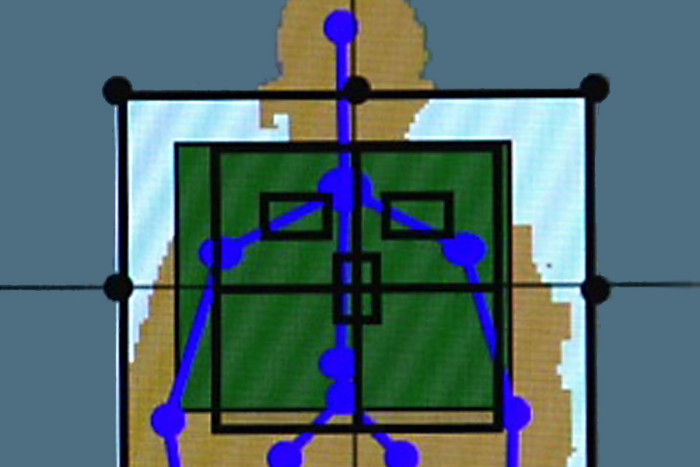
"Using proprietary software developed for the Microsoft Kinect system, researchers at Washington University School of Medicine in St. Louis have adapted hands-free technology used for the popular Xbox system to aid radiographers when taking X-rays.
The technology could benefit all patients but particularly children because of their sensitivity to radiation and greater variation in body sizes, which can range from premature infants to adult-sized teenagers. Setting appropriate X-ray techniques to minimize radiation exposure depends on the thickness of the body part being imaged. High-quality X-rays are critical in determining diagnoses and treatment plans.
Traditionally steel calipers have been used to measure body-part thickness for X-rays. However, calipers are “time-consuming, intrusive and often scary to kids, especially those who are sick or injured."
It seems that the Kinect is used to measure body-part thickness and adjust the x-ray dose. It also checks for the correct positioning and movement of the patient.
This one is sort of obvious, but no less well done. Take a Kinect, put it in the nursery and use it to monitor the movements and breathing of the baby. It might be an easy idea, but to work it has to get the details right.
Rather than making use of the Kinect's depth input, it actually uses infrared and some image processing.
This is one you can buy in the Microsoft Store, currently on special offer at $9.99
Is this a step too far? We have the technology so why not. Of course you also have to buy a Kinect and have the PC to run it.
What could be better than a project that mixes the HoloLens with a Kinect. Thanks to Project-Infrared, there's now a pretty straightforward way to add motion tracking to the HoloLens: Connect it to a Kinect. The Kinect takes the input from the movement of the user and transmits an avatar, mimicking the user's movement and displaying it on the Microsoft HoloLens.
You can see it in action in the video:
Project-Infrared has been released to the community as an open-source GitHub repository
Microsoft says work on the next two versions of TypeScript is going well, with both TypeScript 6 and 7 on course to appear in early 2026. TypeScript 7.0 is the version that is being rewritten in nativ [ ... ]
Coursera is running a global New Year promotion offering 50% discount on Cousera Plus for new subscribers. For small businesses in the US and Europe there's is a similar 50% discount for "C [ ... ]