| PrimeSense Give Details Of Tiny Depth Sensor |
| Written by Harry Fairhead | |||
| Wednesday, 16 January 2013 | |||
|
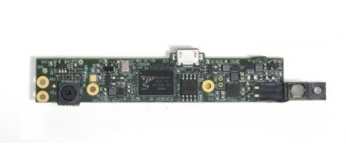
PrimeSense has given some technical details of the new Capri sensor which promises to be small enough to fit in mobile devices. As the PrimeSense blog says: "Capri’s design is significantly smaller than the prior reference design (order of magnitude of 1/10). As this is a reference design, the OEMs will work with it, and integrate it into their product, so the final design and shape will differ between OEMs and devices."
Capri 1.25 includes the following features:
"The size we had in mind is such that it can be integrated in today’s small consumer devices, such as tablets and smart phones. On top of reducing the size, we worked on every aspect of the design and improved it. Starting with the System on Chip, which is the brain of the system, which uses improved and more powerful algorithms, board components and design, optics, every component is improved." Capri is scheduled to be available in mid to late 2013 for companies able to purchase a minimum of 100k annually. Clearly this isn't going to be a reference platform for the lone experimenter. We are going to have to wait for a company to build it into a device before we can start to develop for the smaller device.
Capri isn't the only small, low-cost, depth sensing device about to hit the market. The Leap device is small and it claims an amazing accuracy. It will also be available for around $70 and hence suitable for a range of tasks that we currently use a mouse for. From promotional videos and demonstrations the Leap seems more suited for detecting hand gestures and the location of small objects in front of the screen. The Capri on the other hand seems to have a dept range that could make it more suitable for full 3D scanning and body detection. There is also a forthcoming camera from Creative that links to the Intel Perceptual Computing SDK and has a pre-order price of $149. Developers taking part in the Intel Perceptual Computing Challenge are now being invited to borrow a camera in order to develop apps. Software is of course the key missing component. Leap is making its device available to developers in the hope that some compelling applications result. PrimeSense on the other had is hoping that OpenNI will provide a good software foundation for the Capri. Notice that while OpenNI does provide access to some proprietary "middleware" including skeletonization it isn't as good as the software included with the Kinect SDK. Will Microsoft be interested in the Capri as a way of building a depth sensor into new hardware - we will have to wait and see. OpenNI 2.0 - Another Way To Use Kinect Leap 3D Sensor - Too Good To Be True? Intel Perceptual Computing Challenge Kinect Tracks A Single Finger With A New SDK
To be informed about new articles on I Programmer, install the I Programmer Toolbar, subscribe to the RSS feed, follow us on, Twitter, Facebook, Google+ or Linkedin, or sign up for our weekly newsletter.
Comments
or email your comment to: comments@i-programmer.info

|
|||
| Last Updated ( Wednesday, 16 January 2013 ) |