| ACTA Decisively Rejected by European Parliament |
| Written by Sue Gee | |||
| Wednesday, 04 July 2012 | |||
|
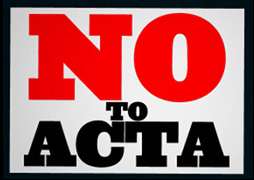
The European Parliament has rejected ACTA by a huge majority, giving a clear signal to the rest of the world that this treaty should not be ratified. ACTA isn't yet dead - but it has been stopped in its tracks.
Despite political pressure and the last-minute activities of a strong pro-ACTA lobby, the vote at the EU parliament in Strasbourg on July 4, 2012 was 478 to 39 against ratification of the Anti-Counterfeiting Trade Agreement with 185 abstentions. This is a considerable victory and hopefully will be sufficient to kill ACTA within Europe. According to Michael Geist, a Canadian academic who is Canada Research Chair in Internet and E-Commerce Law at the University of Ottawa: ACTA is not yet dead - it may still eke out the necessary six ratifications in a year or two for it to take effect - but it is badly damaged and will seemingly never achieve the goals of its supporters as a model for other countries to adopt and to emerge as a new global standard for IP enforcement. He expects that there will be new efforts to revive the agreement in Europe or that alternatives will be found to implement its provisions. However, he also points to the "ripple effect" of the European stance against the treaty noting the recent Australian parliamentary committee recommendation to delay ACTA ratification and the mounting opposition around the world. As ever there is more to do to defend Internet freedom. AccessNow has a new campaign to persuade the ITU, International Telecommunications Union, to publicize and reject any proposals that would limit the openness of the internet. It has already had some success in that the Secretary-General of the ITU is recommending the ITU release its plans and it has a week in which to collect signatures to a petition to ensure the ITU accepts this recommendation. Click this banner to add your name to this petition:
It would indeed be good if the impetus of the successful anti-ACTA campaign leads to enhanced openness and greater Internet freedom.
More InformationRelated ArticlesACTA Activists Organize Street Protests SOPA and PIPA Shelved But Is ACTA Unstoppable?
Comments
or email your comment to: comments@i-programmer.info
To be informed about new articles on I Programmer, install the I Programmer Toolbar, subscribe to the RSS feed, follow us on, Twitter, Facebook, Google+ or Linkedin, or sign up for our weekly newsletter.

|
|||
| Last Updated ( Wednesday, 04 July 2012 ) |