| Bletchley Park - Site of UK National Importance |
| Written by Sue Gee | |||
| Friday, 26 March 2010 | |||
|
Bletchley Park is arguably the place where computing maths and general cleverness won the Second World War, but until now it has had only limited financial support as a site of historic interest.
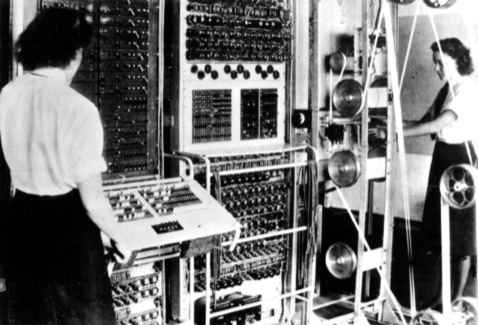
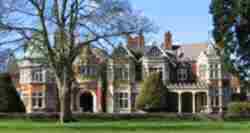
Colossus in use at Bletchly Park during WW2 The good news is that Bletchley Park - the site of code breaking operations during the second world war and where many of the first steps in the development of computing taken - has been awarded £250,000 by the UK Department of Culture, Media and Sport (DCMS). The funding is for urgent repairs so the down side of this news is that the historic site is still under supported and under valued - money for urgent repairs is hardly recognition of the site's unique place in modern history. The grant will allow the Bletchley Park Trust to tackle a variety of badly needed works on the ageing site, including resurfacing pot-holed roads and car-parks and new roofs for the iconic but fragile codebreaking buildings.
Part of the problem is that site is the victim of its own success. Vistor numbers having doubled in the past few years and hence wear and tear are significant. The Trust also has an application for up to £4 million development money with the Heritage Lottery Fund and needs to raise £1 million to complement it. Back in 2008, 100 computer scientists wrote a letter to the Times (London) demanding that the UK government take action to save one of the most important locations in the history of WW2 and computing. 
What is Bletchley Park? Bletchley Park was home to the codebreakers of World War II and the birthplace of the modern computer. Today it is a museum and heritage site, with a fascinating range of permanent exhibitions and private collections. Among other things, visitors will see the famous Abwehr Enigma Machine, the Lorenz and other mechanical cipher systems and the Bombe and Colossus Rebuilds. Related ArticleHP to liberate Bletchley Archive To be informed about new articles on I Programmer, sign up for our weekly newsletter, subscribe to the RSS feed and follow us on Twitter, Facebook or Linkedin.
Comments
or email your comment to: comments@i-programmer.info <ASIN:0192801325> <ASIN:0330419293> <ASIN:0947712348> |
|||
| Last Updated ( Sunday, 14 April 2024 ) |