| Pay-As-You-Go for Electricity |
| Written by Harry Fairhead |
| Monday, 20 February 2012 |
|
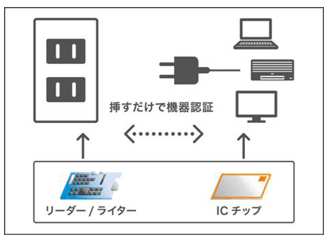
As the world becomes more aware of the cost of power and the need to eliminate waste and misuse, Sony has come up with an idea that uses near field communication to authenticate its proper use. Sony's scheme would require users to be authenticated before they can get electricity from a wall outlet and perhaps spells the end of freeloading on power in public places such as hotels and airport lounges. The idea is outlined in a series of diagrams. The first one represents the proposed authentication outlet and the way in which it incorporates non-contact IC card (aka near field communication, NFC) technology:
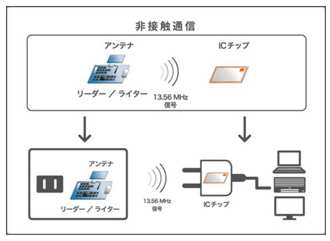
Only when the outlet detects an approved device being used by a recognised user does it get power. In one scheme the built-in IC chip is connected to an antenna:
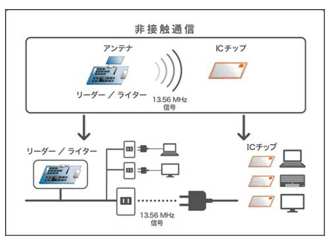
An alternative, more sophisticated, system expands the range of the control device and allows the socket and connected gadget to negotiate the supply of power, has the read signal superimposed on the powerline.
The system is envisaged as preventing theft, monitoring power usage, managing distributed power supply and facilitating pay-as-you-go charging schemes for power in public places. A prototype of the system will be demonstrated at NFC & Smart World 2012 in Tokyo on March 6. So the next time you search for a WiFi connection to use while on the move consider yourself lucky that, for the moment at least, you don't have to do the same for a recharge. It also raises the question of how many other things could be brought under the same sort of control?
More InformationSony's proposal for device management using non-contact IC card technology (in Japanese)
Comments
or email your comment to: comments@i-programmer.info
To be informed about new articles on I Programmer, subscribe to the RSS feed, follow us on Google+, Twitter, Linkedin or Facebook or sign up for our weekly newsletter.

|
| Last Updated ( Monday, 20 February 2012 ) |