| Agile As Family Therapy |
| Written by Lucy Black | |||
| Tuesday, 26 February 2013 | |||
|
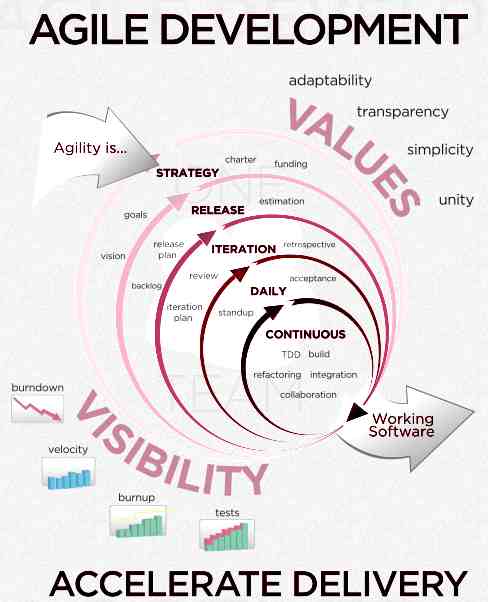
It used to be physicists who poked their noises into other people's subjects, but now it could be programmers. Agile programming is very popular, but currently not as a way to manage your family - this could be about to change. Bruce Feller puts the case, in a recent TED talk, for the agile approach to... no, not programming but to running a family. As the notes to the video say: "Bruce Feiler has a radical idea: To deal with the stress of modern family life, go agile. Inspired by agile software programming, Feiler introduces family practices which encourage flexibility, bottom-up idea flow, constant feedback and accountability. One surprising feature: Kids pick their own punishments." OK... After explaining the basic idea of agile versus the old fashioned waterfall model he says: "Inevitably people began taking some of these techniques and applying it to their family" As a programmer, I'm not sure that I see where the inevitability stems from, but perhaps I'm missing the point. Perhaps humans have a basic flaw that causes them to overgeneralize any new theory. On the other hand, I can see the sense in the "Agile Thanksgiving", but it sounds more like a distributed programming approach: "one group of people working on the food, one setting the table and one greeting visitors at the door." From this point the video provides examples of how agile can help with family life. Watch the video and see what you think:
There are lots of assertions you might want to take issue with - the most controversial being that agile works with software so it works with kids. There are lots of programmers who would argue that agile doesn't work with software, let alone with kids. If you do believe in agile, and there are also lots of programmers who do, then perhaps you can't resist the idea of spreading some of its ideas to a wider set of issues. Perhaps the truth is that the real benefit comes from just trying - no matter what the philosophy or methodology. Sitting down and considering the process is probably more important than applying any particular methodology to that process. Human intelligence is this flexible.
Programmers do have a way of thinking about things that can help with non-coding situations, but I doubt that it is as narrow as agile. It is more likely that general algorithmic thought is what is effective. The power to organize what happens to be more efficient, rewarding and effective, is what applying a good algorithm is all about. Perhaps it isn't Agile Thanksgiving that is the success, but Algorithmic Thanksgiving. What next - Kanban, Scrum, lean, test driven development, gamification - all good ways to manage a family.
More Informationhttp://agilemanifesto.org/Related ArticlesSocial Networks, Suicide and Statistics Programming - A Life Long Challenge A Practical Approach to Large-Scale Agile Development Essential Skills for the Agile Developer
To be informed about new articles on I Programmer, install the I Programmer Toolbar, subscribe to the RSS feed, follow us on, Twitter, Facebook, Google+ or Linkedin, or sign up for our weekly newsletter.
Comments
or email your comment to: comments@i-programmer.info

|
|||
| Last Updated ( Tuesday, 26 February 2013 ) |