| Howard Aiken and the Harvard Mark I |
| Written by Historian | ||||
Page 1 of 3 The Harvard Mark I now has an established place in the history of computing. However, without financial help from IBM it would never have materialized. It is more than 75 years since the memorandum formalizing IBM's development of this iconic machine was written on January 18, 1938.

The age of the mechanical and electro- mechanical computer is still close enough in time for it to be recent history. Yet the whole idea of a computer with mechanical parts seems so out of place with today's technology that it might as well be Victorian or something that happened in the first industrial revolution. We have almost forgotten what relays are let alone the more exotic electromechanical devices such as uni-selectors. Electro-mechanical computers are the dinosaurs of computer history - huge machines with less intelligence than a pocket calculator. They were even obsolete by the time they were complete! But they were the first real programmable machines and they heralded the computer age. The largest and most controversial of the electro-mechanical computers was the Harvard Mark 1 and its creator Howard Aiken was no less a character.
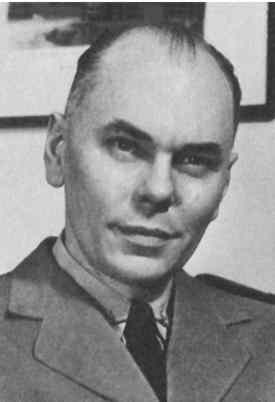
Howard Hathaway Aiken (1900-1973)
Howard Aiken is a difficult figure to write about because some people seem to have loved him and others hated him just as much. He clearly was strong willed but in some people's opinion this spilled over into a sort of self-centred conceit. The story of how he came to create one of the first programmable computers is also an odd one. Born in New Jersey to parents who were not well off, Aiken worked hard to gain an education. He literally worked hard - 12 hours a the Indianapolis Light and Heat Company while at technical high school. He put himself through university by working for the four years at the Madison Gas and Electric company. He studied engineering and got his degree in 1923. Being an engineer what was more natural than to continue to work for the Gas and Electric company where he designed and built generating stations. After ten years of engineering Aiken made a startling discovery. At the age of 32 he realised that he had studied for the wrong degree! He wanted to be a mathematician or failing that a physicist. He enrolled for a year at the University of Chicago and then moved to Harvard where he finally obtained a degree in physics and then a doctorate in physics at the age of 39. He supported himself through his second education by teaching physics and communications engineering. Wanted - a calculatorAiken's interest in computing did not arise as a pure or philosophical thought. It was the need to solve mathematical problems that drove him towards the idea of a computer. Like many of the early computer pioneers he was appalled by the waste of time and often the impossibility of performing numerical calculations. His doctoral thesis was on the theory of space charge - a key aspect of the way valves work. The trouble was to get any real results he had to solve a set of non-linear differential equations. In his thesis he comments on the amount of work involved in solving even a small number of interesting cases - let alone characterizing the entire behavior. This is the reason he had started to think about building his own calculator. Wanting a calculator to solve his particular mathematical problems was a common motivation to many of the early pioneers, but unlike them Aiken had read the works of Babbage. Many early pioneers claim honestly to have re-invented many of Babbage's ideas, but Aiken acknowledged that Babbage was a powerful influence on his ideas. He thought of himself as a spiritual descendant of Babbage, continuing the line of research that he started. After gaining his doctoral degree he taught maths at Harvard and tried to get someone interested in building his machine. He thought in terms of using existing computing units and somehow making them work together to a common end. At this stage he had no more than an idea but he did seem to have a very sophisticated attitude for the time in recognizing that the idea could be realized using a range of possible hardware. When he approached NCR he thought in terms of using their hardware, electronics from RCA and tabulator units from IBM. At first no one was interested in building his machine. They all thought it was a good idea but no-one wanted to commit money to the project. The President of Harvard even went so far as to warn Aiken that he was risking his long term future by pursuing such a wild scheme. IBM to the rescueThen there came the meeting between Aiken and Thomas Watson Senior. Harvard had been favored by the first boss of IBM since he met the educationalist Dr Wood. Watson had given Harvard lots of free hardware and technicians to run it. The Harvard Astronomical Computing Bureau was already using IBM 601 multipliers and sequence machines and this was the connection between Aiken and IBM. The astronomer Howard Shapley knew Aiken and suggested that he approach IBM for help building his machine.
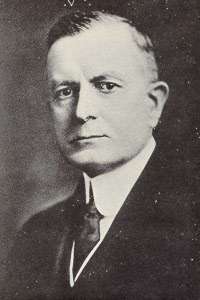
Thomas J Watson Sr (1874-1956)
Aiken wasn't enthusiastic about getting involved with IBM and with Watson in particular. He had seen the way that Watson treated his academic colleges to bouts of bad temper and bawlings out. Still without other backers, Aiken talked to some of IBM's best technicians. In particular to James Wares Bryce who had invented hundreds of calculating devices - counters, multiplying and dividing units etc.. and of course all fully mechanical! All of these units became part of the machine that Aiken was to build with IBM's help. The Harvard Mark I - or the Automatic Sequence Controlled Calculator (ASCC) Mark I to give it its full name - was funded by IBM at Watson's say so to the tune of $5 million. James Bryce was so enthusiastic about the project that he explained it to Watson on Aiken's behalf and Watson made a snap decision. IBM engineers were assigned to build the machine as it took shape at the IBM Endicott manufacturing plant. Aiken spent two summers there and then was summoned to the Navy as Lieutenant Commander - the war was more important. Aiken on active serviceMost of Aiken's war years were spent with the Mark I but one early incident gives some insight into his personality. Working first as an instructor he eventually found himself at the Navy mines school. He was sent out on a mission to deal with a torpedo that a German submarine had launched and which had run aground on a beach. When the torpedo was located Aiken, as the ranking officer, felt obliged to disarm it. As the first torpedo of its kind to be found on a US beach he had no idea how to go about it but this increased the value of the knowledge to the war effort. He unscrewed a metal plate using some radio tools and it shot out across the beach as the firing spring was released. When asked why he didn't simply blow the device up with rife fire Aiken commented "Lieutenant Commanders were a dime a dozen. Torpedoes were one of the most valuable things you can capture." Clearly this sentiment doesn't square with his reputation for a high self regard!
<ASIN: 0262032627> <ASIN:0262032635> <ASIN:0471441473> |
||||
| Last Updated ( Tuesday, 12 August 2014 ) |