| The Greatest Machine Never Built (Video) |
| Written by Historian | |||
| Sunday, 29 April 2012 | |||
|
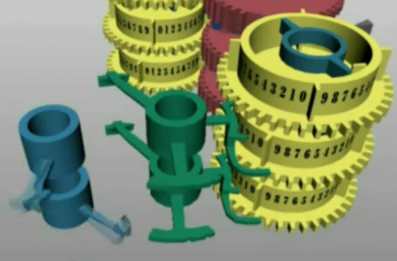
Computers were invented in the 1830s by the Victorian mathematician Charles Babbage. Many of us know this, but if you watch this video you will come to understand just what this actually means. John Graham-Cumming is the leading light behind Plan 28, a project to actually build the analytical engine conceived in the 1830's by Babbage, and his TEDx talk outlines why this is a very special machine. There is a tendency to think that everything that Babbage thought up was little more than a calculating machine, but as the video makes 100% clear the analytical engine was a real computer that could run programs. If you want to know more simply watch the video:
Of course Ada Lovelace was the first programmer, but more importantly her work with Babbage took the analytical engine from the realms of mathematical table construction into the wider world of non-mathematical programming. Her notes indicate that had the machine been built there is no question that it would have been exploited just as we use silicon-based machines today. To see the machine built and running programs would be the final proof that Babbage really did invent the general purpose computer in the age of the steam engine.
If you would like to know more about the reconstruction, the charity set up to build the analytical engine is called Plan 28 after one of Babbage's plans for the machine and has a mailing list you can join. The project hopes to have a working machine before the 2030s. More InformationFurther ReadingPlans to build Babbage's Analytical Engine Ada Lovelace, the first programmer Computer Memory and Pigeonholes
Comments
or email your comment to: comments@i-programmer.info
To be informed about new articles on I Programmer, subscribe to the RSS feed, follow us on Google+, Twitter, Linkedin or Facebook or sign up for our weekly newsletter.

|
|||
| Last Updated ( Thursday, 27 December 2018 ) |