| A Swarm of Quadrotors |
| Written by Harry Fairhead | |||
| Wednesday, 01 February 2012 | |||
|
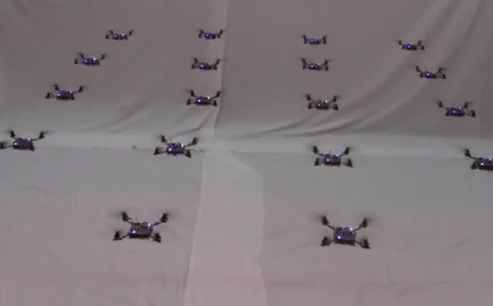
The amazing aspect of this new quadrotor algorithm is controlling so many of them in the air at once - the effect is truly mesmerizing. We haven't had a news item which featured quadrotors for some time. Part of the reason is that, once you have seen a computer controlled quadrotor perform its various acrobatic stunts, there isn't much left to see. It is not that they are tedious or boring, more that their capabilities are obvious. But now we have something distinctly new - a swarm of nano quadrotors. While "nano" might be the wrong word - miniature would be better - there is no doubting the use of the word "swarm".
The programming and overall system is the work of the GRASP Lab at the University of Pennsylvania, well known for lots of quadrotor algorithms. The nano version of the quadrotors were developed by KMel Robotics.The same positioning algorithms are used with these smaller devices as with the full sized quadrotors. The new element is having so many of them in the air at one time. Clearly there is plenty of scope for implementing true swarming and ant style algorithms, but there is also the simple pleasure at watching them at work:
If you switched off at the end credits, go back and watch what happens after that - you will be rewarded with a smiley. Although it probably doesn't matter as the spectale is reward enough, is there a practical application for this sort of robot other than the obvious military or crowd control scenarios? Related ArticlesQuadrotor Swarm Constructors (video)
Comments
or email your comment to: comments@i-programmer.info
To be informed about new articles on I Programmer, subscribe to the RSS feed, follow us on Google+, Twitter, Linkedin or Facebook or sign up for our weekly newsletter. 
|
|||
| Last Updated ( Wednesday, 01 February 2012 ) |