| Darpa's Mule Looks Useful |
| Written by Lucy Black | |||
| Saturday, 22 December 2012 | |||
|
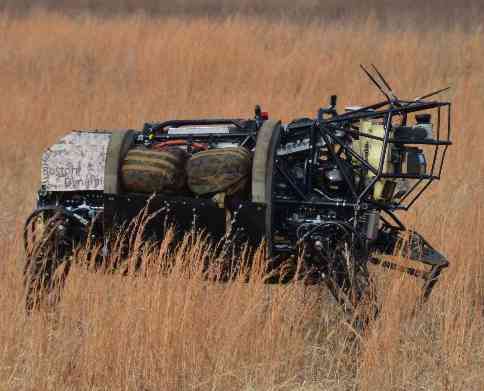
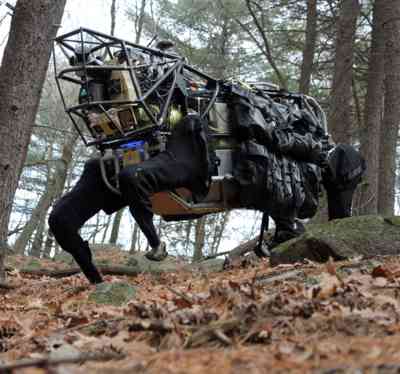
We seem to be heading towards the robotic future ever faster. Now Darpa's robotic mule seems to have joined driverless cars and robot vacs - it looks useful. In this video you can see it following a solider, carefully picking its way through difficult terrain and even righting itself when it falls over. Darpa's mule, more correctly known as LS3 - Legged Squad Support System, has been working out in the woods of central Virginia, Fort Pickett to be more precise. It demonstrates that it has developed from being just a mobile platform into a true AI-based robot.
It now follows the leader and works out its own best route across difficult terrain. If you watch the video you might think that it is moving slowly, but moving cautiously is a better description. It evaluates each possible foot fall to make sure it stays stable. If you look at the end of the video you can see that when the ground is smooth it can move at a fairly high speed. Although its leader seems to be carrying a lot of electronic control gear, the robot is actually responding to voice commands. It currently knows ten basic commands, such as follow, start and stop. It can carry 400lbs with a range of 20 miles and it can even be used as a recharger for equipment when the patrol makes camp. It has three levels of "follow" command:
But watch the video. It's slightly creepy and very impressive:
You might want to ask the question of why the robot has been built into the form of something that looks like a pack mule. Clearly part of the reason is that a four-footed robot can negotiate terrain that a wheeled vehicle would find difficult, but there is also a psychological reason. "(it can) ... follow squad members through rugged terrain and interact with troops in a natural way similar to a trained animal with its handler." Who knows, troops might even make a connection with the robot and start to treat it like a member of the team. Give that its sensors don't rely on light it could even be used to lead the squad through difficult conditions at night. The bottom line seems to be that the military is pleased with what it has dones so far and have lots more tests ready for it.
New Entrants to Robot Hall of Fame I-SoDog - Your Robot Best Friend MorpHex - The Amazing Rolling Robot
To be informed about new articles on I Programmer, install the I Programmer Toolbar, subscribe to the RSS feed, follow us on, Twitter, Facebook, Google+ or Linkedin, or sign up for our weekly newsletter.
Comments
or email your comment to: comments@i-programmer.info

|
|||
| Last Updated ( Saturday, 22 December 2012 ) |