| 30 years ago - Microsoft signs contract with IBM to create MS-DOS |
| Friday, 05 November 2010 | |||
|
On 6 November 1980 Bill Gates, head of a small firm called Microsoft, agreed to write an operating system for Project Chess, IBM's speculative venture into the world of personal computing. 
Microsoft's contract to write MS-DOS was probably the single most important event in turning the small company of the late 70s into the massive behemoth it has now become. So how did it happen?
IBM, then still thought of as International Business machines, was the old, biggest and most profitable of all the computer companies, but it was incapable of moving at the fast pace required to join in the microcomputer revolution. It also had never relinquished the attitude that computers should be the preserve of big business, as famously summed up (although probably in a misquotation) by Thomas J Watson Sr in 1943 (an era when IBM was busy manufacturing calculating machines with cogs and gears that that worldwide demand for electronic computers was probably limited to five such machines. To make its move into microcomputers IBM set up a separate business unit which decided in turn to outsource the software as well as the hardware for the emerging IBM PC, codenamed Project Chess Moreover, when asked to write the PCDOS operating system, Microsoft did even more outsourcing. It bought outright an operating system from Seattle Computer Products that would save a year in development time. Although IBM was under the impression that it had sole rights to PCDOS, in fact Microsoft retained the right to sell a version called MS-DOS and it was this operating system that quickly came to dominate in the clone marketing wars of the early 80's.
The apocryphal story that he was enjoying a day off flying his plane, is now seen to be an over simplified, or even falsified account, of the events. Even so IBM's unexpected decision to contract an almost unheard of startup, certainly determined the fates and fortunes of his and Bill Gate's companies. Related articles:Bill Gates - before he was famous Gary Kildall - CP/M, Digital Research and GEM
<ASIN:0071358927> <ASIN:0201198223> |
|||
| Last Updated ( Sunday, 24 May 2020 ) |
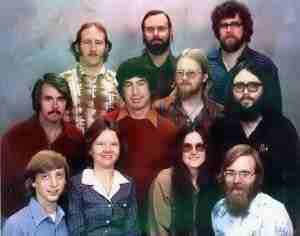 The Microsoft team circa 1980
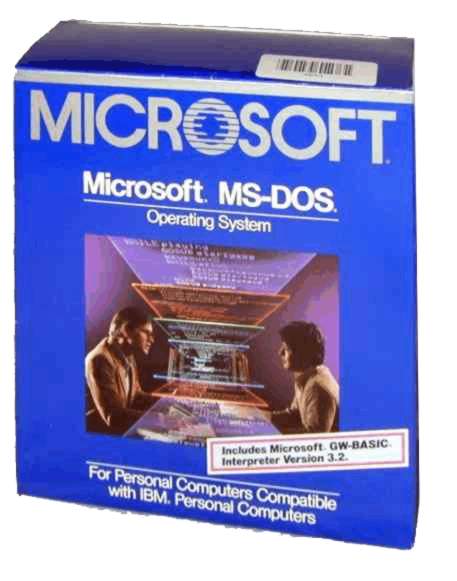 The IBM PC offered a choice of three operating systems - the other two being UCSD P and CP/M 86 - and the future development of the personal computer industry might have been very different had