Programming News and Views
Send your programming press releases, news items or comments to: NewsDesk@i-programmer.info
Turn Claude Into Your Personal Research Assistant 18 Dec | Nikos Vaggalis  Claude Scientific Skills give Claude super powers, not just on coding, but about any science. We try them out to see what's on offer. |
Android Studio Otter 2 Is Stable 18 Dec | Kay Ewbank  The Android developer team has announced that Android Studio Otter 2 Feature Drop is stable. Feature Drop is the term used for updates that are built on top of the IntelliJ platform updates, and follow soon after each new "animal" release - in this case Otter. |
Make Merry With the ESP32 17 Dec | Harry Fairhead  For me 2025 was the year of the Espressif ESP32 - well it extended back into 2024. By the end of the year I was convinced that for the sort of IoT projects that I want to do around my own home the ESP32 S3 is the single board microcontroller of choice and I heartily recommend it to any programmer wanting to get into the IoT scene. |
Apple Just Lost The Epic App Store Battle - Again! 17 Dec | Mike James  Apple can't seem to catch a break at the moment. It keeps appealing and it keeps losing. Now its appeal against an injunction that called for it to reduce fees for external in app purchases has been rejected. |
JetBrains - Work With AI Effectively 16 Dec | Nikos Vaggalis  In cooperation with the Nebius AI cloud platform, JetBrains has launched a set of ten free courses for developers that demonstrate how to incorporate AI in their workflow to become 10X productive. |
Docker Desktop 4.5 Adds Dynamic MCP 16 Dec | Kay Ewbank  Docker has announced an upgrade to Docker Desktop with improvements including a new Dynamic MCP feature. |
Rust For Linux No Longer Experimental 15 Dec | Harry Fairhead  Linux maintainers attending the Linux Kernel Maintainers Summit have said that Rust in the Linux kernel should no longer be treated as experimental, but rather as a core part of the kernel. |
BellSoft Introduces Hardened Container Images 15 Dec | Nikos Vaggalis  The concept of hardened images has been picking up lately. The logic behind them is to address the issues arising from running container images. |
TIME Magazine Recognizes the Architects of AI 14 Dec | Lucy Black  Time Magazine has named the Architects of AI as its 2025 Person of the Year, depicting on its cover eight individuals who are seen to have driven the rapid and consequential development of artificial intelligence. |
December Week 2 13 Dec | Editor  This week saw the publication of Master The ESP32: WiFi, by Harry Fairhead and Mike James. Our chosen first extract is from its final chapter and is about ESP Now, a facility for flexible peer-to-peer networking mode available for use with all ESP32 devices. We also introduce a new News section - Viewpoint. In the inaugural item, Mike James asks "How Can You Not Be Impressed By AI"? |
PHP 8.5 Adds URI Extension 12 Dec | Kay Ewbank  PHP 8.5 has been released with an extension supporting secure URI and URL parsing, a new a pipe operator and persistent cURL handles. |
Programmer Gifts - Pi For Xmas 12 Dec | Harry Fairhead 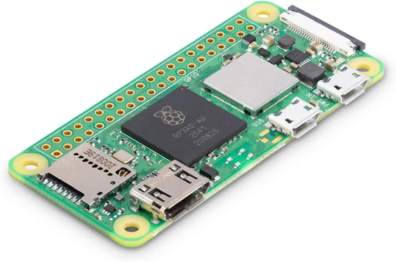 The holiday season is a good time to learn about computers - you have the time. But where to start? Our advice is to ignore the pudding and go for a Pi. |
Shuttle Launches Neptune 11 Dec | Kay Ewbank  Shuttle has launched Neptune, a universal AI platform engineer that understands code, generates a deterministic infrastructure spec, provisions cloud resources, and integrates with AI coding tools and IDEs. |
Amazon Nova Forge 11 Dec | Kay Ewbank  Amazon has released Nova Forge, a new service that developers can use to build their own frontier models using Nova. Nova Forge customers can start their development from early model checkpoints, blend their datasets with Amazon Nova-curated training data, and host their custom models securely on AWS. |
How Can You Not Be Impressed By AI? 10 Dec | Mike James 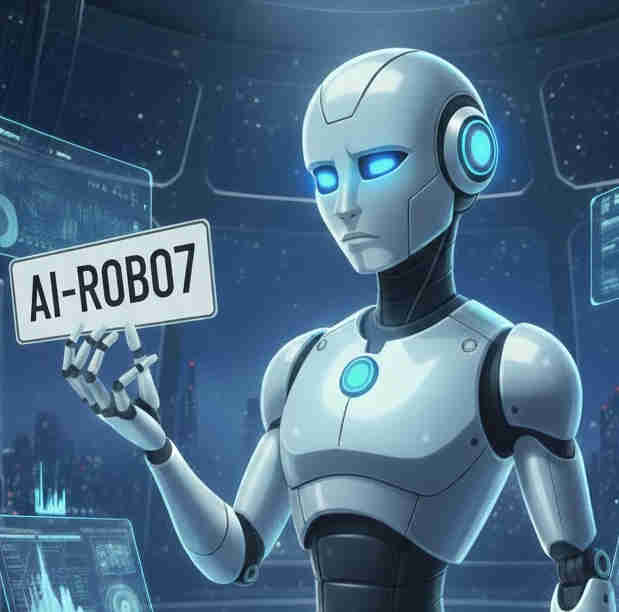 There is a big backlash against AI at the moment and given the threat it poses to jobs. this can hardly be an unexpected response. However, much of the backlash focuses on how useless and unimpressive it is. This is crazy. AI has achieved so much of its goal in such a short time, this is an entirely untenable position. |
The Goose Advent Of AI Has Commenced 10 Dec | Nikos Vaggalis  A new Advent calendar had joined those for Java, Kotlin and Rust. We now have Advent of AI, a series of AI engineering challenges from Goose, that is already underway. |
LangGrant Announces LEDGE MCP Server 09 Dec | Kay Ewbank  LangGrant has announced its LEDGE MCP server that enables LLMs to reason across multiple enterprise databases and generate multi-step analytics plans without transmitting raw data to the model. The system works entirely with metadata and schema context. |
Grace Hopper - Her 119th Anniversary 09 Dec | Sue Gee  Today, December 9th 2025, is the 119th anniversary of the birth of Grace Hopper. Her concern for teaching young people is why Computer Science Education Week and the Hour of Code, now the Hour of AI, are timed to coincide with her birthday. Her legacy also extends into other areas. |
Other Articles
|

I Programmer Library
Featured Articles
What Would P=NP Look Like? 15 Dec | Mike James  The question of whether the class of problems called NP is the same as the class P is one of the million dollar millennium prize challenges. Even if it wasn't, it would still be important. If NP=P then the world is a very strange place. This is a bonus chapter for Programmer's Guide To Theory. |
What Exactly Is A First Class Function - And Why You Should Care 12 Dec | Ian Elliot  You may have heard people saying that, in some language or another, functions were first class objects, or have come across the term "first class function". What does it mean? And why is it so good? |
Master The ESP32 WiFi: ESPNow 08 Dec | Harry Fairhead and Mike James  ESPNow is a flexible peer-to-peer networking mode that is available for use with all ESP32 devices. The problem is that it can be difficult to get started, but not if you follow our simple introduction. This is an extract from our latest book on the ESP in C. |
Ivan Sutherland - Father of Computer Graphics 06 Dec | Historian  Computer graphics wasn't invented by one man, but Ivan Sutherland had a lot to do with it and his is the name you generally think of first in connection with its development. |
Programmer's Python Data - JSON 03 Dec | Mike James  JSON is a very popular text data format, but it is based on JavaScript. Can this work with Python? Find out what lies behind in this extract from Programmer's Python: Everything is Data. |
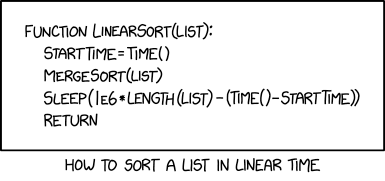
Unhandled Exception!
|
Book Watch
Follow Book Watch on Twitter
Book Watch is I Programmer's listing of new books and is compiled using publishers' publicity material. It is not to be read as a review where we provide an independent assessment. Some but by no means all of the books in Book Watch are eventually reviewed.
C# Programming, 4th Ed (In Easy Steps) 15 Dec This book is a beginner-friendly guide to C#. In easy steps, and with crystal-clear, syntax-highlighted examples, Mike McGrath starts by building a solid foundation with C# essentials — variables, arrays, logic, loops, methods, and classes. He then goes on to show how to grasp Object-Oriented Programming (OOP) to structure projects, how tocreate real-world applications for Windows desktops, and Universal apps that run seamlessly across multiple devices. <ASIN:1787910385> |
How a Game Lives (HarperPop) 12 Dec This is an artfully packaged book for the devoted and casual fans of gaming, inviting readers to look at gaming and video games from an intellectual, psychological, and emotional perspective as a major part of our cultural fabric. Jacob Geller has 1 million subscribers to his YouTube channel, where he shares in-depth videos on modern gaming and analysis of the games themselves-- interwoven with conversations about politics, art, history and popular culture. <ASIN:006348319X > |
Master The ESP32 In C (I/O Press) 10 Dec This book looks at using the ESP32's WiFi for IoT projects in which data needs to be shared. Mike James and Harry Fairhead start out with an examination of using FreeRTOS beyond the simple single-task program: using cores, scheduling, locks, synchronization and interrupts. There are chapters covering the different data structures that FreeRTOS provides for inter-task communication, and basic WiFi in station mode. <ASIN:1871962994 > |
| More Book Watch |
Previous Book Watch.
Follow Book Watch on Twitter.
Publishers send your book news to:
bookwatch@i-programmer.info