| SIGGRAPH University - Learn OpenGL |
| Friday, 24 January 2014 | |||
|
MOOCs are not the only courses. The most recent SIGGRAPH included some really good courses and now you can catch up by watching the videos. OpenGL is the standard way to do 3D graphics on most systems, with the exception of Windows and Xbox where Direct3D is still the one to use. It is even the basis of Web 3D graphics in the form of WebGL that all current browsers, even IE, support.
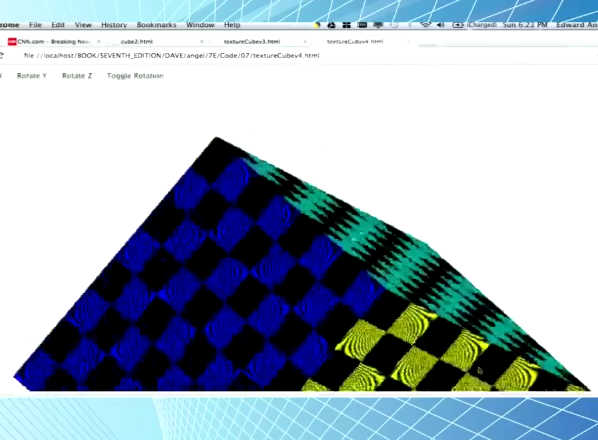
What this means is that it makes sense to learn OpenGL, but it isn't easy. The reason is that it makes use of shader-based rendering and writing a shader is a low-level task that requires a lot of understanding. So sit back and enjoy an introduction presented by Edward Angel of the University of New Mexico and Dave Shreiner of ARM, Inc. There's over 3 hours of it - but at least as it's a video you can hit the Pause button at any time. If you want to be able to read the code make sure to watch in HD.
If you enjoyed this one then you might also like: SIGGRAPH University - "Mobile Game Creation for Everyone" SIGGRAPH University - "The Digital Production Pipeline" SIGGRAPH University - "Introduction to 3D Computer Graphics" SIGGRAPH 2014 will take place 10-14 August in Vancouver, Canada. You can find out more at http://s2014.siggraph.org/ More Information
Related Articles
To be informed about new articles on I Programmer, install the I Programmer Toolbar, subscribe to the RSS feed, follow us on, Twitter, Facebook, Google+ or Linkedin, or sign up for our weekly newsletter.
Comments
or email your comment to: comments@i-programmer.info

|
|||
| Last Updated ( Friday, 24 January 2014 ) |