| Sourcegraph Powers Up Your Code Repository |
| Written by Nikos Vaggalis | |||
| Wednesday, 17 October 2018 | |||
|
Sourcegraph is a code navigation engine that non-destructively rearranges your repository's structure to organize it, as well as powering it up with code intelligence and advanced search capabilities. Best of all Sourcegraph has just gone open source which means that you can deploy it on your own servers to power up your private repositories.
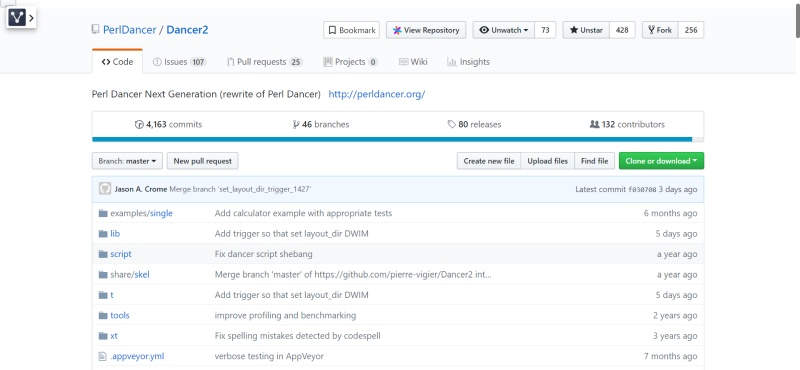
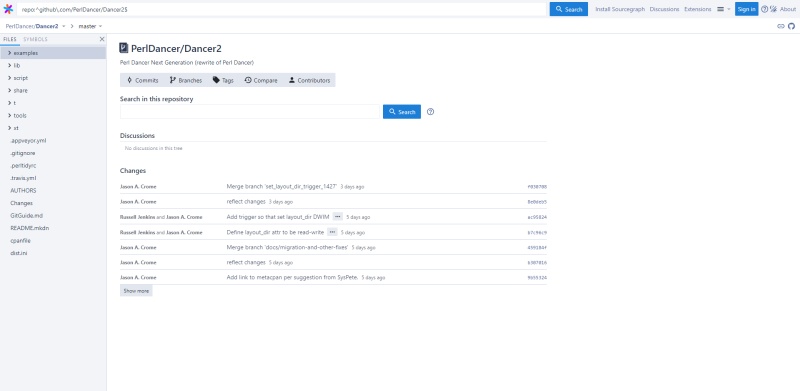
With Docker already set up, deployment is as easy as : docker run making Sourcegraph accessible by default at http://localhost:7080 The next step is to configure it to point at your repositories. IOn addition to Github, Sourcegraph supports repositories from other popular code hosts such as Gitlab, Bitbucket, AWS CodeCommit or even those already cloned to disk. As for repositories available on the public web, powering them up doesn't require much more than having to install the Sourcegraph bookmarklet/browser plugin available for Chrome and Firefox, which when clicked transforms the UI in a snap. Alternatively, you can get the same functionality by appending your repo's path to https://sourcegraph.com/github.com/, for example turning
https://sourcegraph.com/github.com/PerlDancer/Dancer2
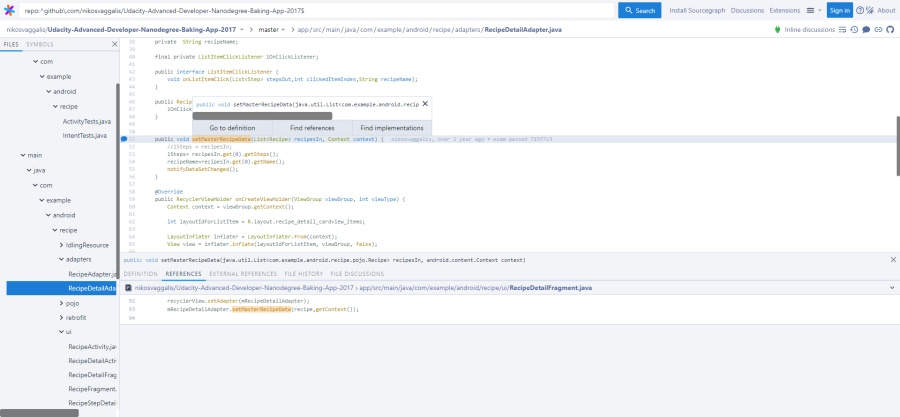
The magic here is that either by the bookmarklet or by the special Sourcegraph url, the scheme works for all repo's big and small, even for my own little personal one: https://sourcegraph.com/github.com/nikosvaggalis/Udacity-Advanced-Developer-Nanodegree-Baking-App-2017
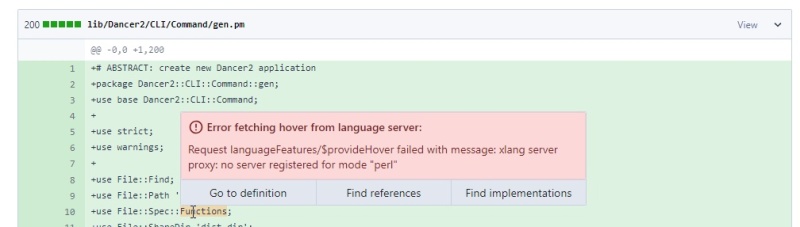
Code intelligence Repos in languages not supported
can still take advantage of the code organizing, symbols tab, and the advanced Code search capabilities, which include:
which support the use of regular expressions and exact queries for full-text searches.
More InformationRelated ArticlesInsight.io - Code Intelligence on GitHub Grimoire Lab-GitHub - Stats On Steroids To be informed about new articles on I Programmer, sign up for our weekly newsletter, subscribe to the RSS feed and follow us on Facebook or Linkedin.

Comments
or email your comment to: comments@i-programmer.info |
|||
| Last Updated ( Wednesday, 17 October 2018 ) |