| On This Day In 1956 - SAGE Announced |
| Friday, 16 January 2026 | |||
|
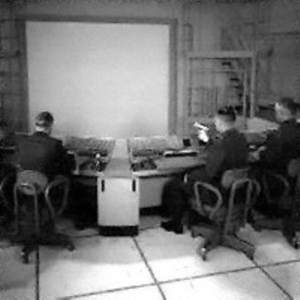
On this day 70 years ago, the US government SAGE (Semi-Automatic Ground Environment), the most ambitious computing project of the Cold War. In response to the prospect of a Soviet bomber attack, this massive network of radar and "super-computers" pioneered real-time processing and the interactive display technologies that defined early computing. On January 16, 1956, the public received its first official glimpse of the Semi-Automatic Ground Environment, better known as SAGE. At the height of the Cold War, the threat of a "nuclear Pearl Harbor" via Soviet bombers crossing the North Pole was a constant anxiety. The solution was an engineering feat so vast it almost sounds like science fiction: a nationwide "electronic shield" that could track hundreds of aircraft simultaneously and coordinate a response in real-time.
Commissioned by the US Air Force and developed by MIT’s Lincoln Laboratory, SAGE was the first large-scale computer communications network. It was built around the AN/FSQ-7 computer, a behemoth that remains the largest discrete computer system ever built. Each of the 24 "Direction Centers" housed two of these machines (for 100% redundancy), each containing 60,000 vacuum tubes, weighing 250 tons, and occupying an entire floor of a reinforced concrete "blockhouse." While its primary mission was defense, SAGE’s true legacy is the birth of modern computing as we know it. Before SAGE, computers were batch-processing machines that crunched numbers in isolation. SAGE forced the invention of technologies we now take for granted:
The project cost more than the Manhattan Project, and by the time it was fully operational in the early 1960s, the threat had shifted from bombers to Intercontinental Ballistic Missiles (ICBMs), against which SAGE was largely defenseless. However, the effort invested was not wasted. The technology for interacting directly with a computer display to manage a physical object in space formed the foundations of modern Air Traffic Control. SAGE remained in service until 1983, a testament to the engineering of the 1950s. Today, we remember it not just as a Cold War relic, but as the moment the computer left the lab and entered the real world. Related ArticlesSAGE - Computer of the Cold War To be informed about new articles on I Programmer, sign up for our weekly newsletter, subscribe to the RSS feed and follow us on Facebook or Linkedin. 
Comments
or email your comment to: comments@i-programmer.info
|
|||
| Last Updated ( Friday, 16 January 2026 ) |