| TIME Magazine Recognizes the Architects of AI |
| Written by Lucy Black | |||
| Sunday, 14 December 2025 | |||
|
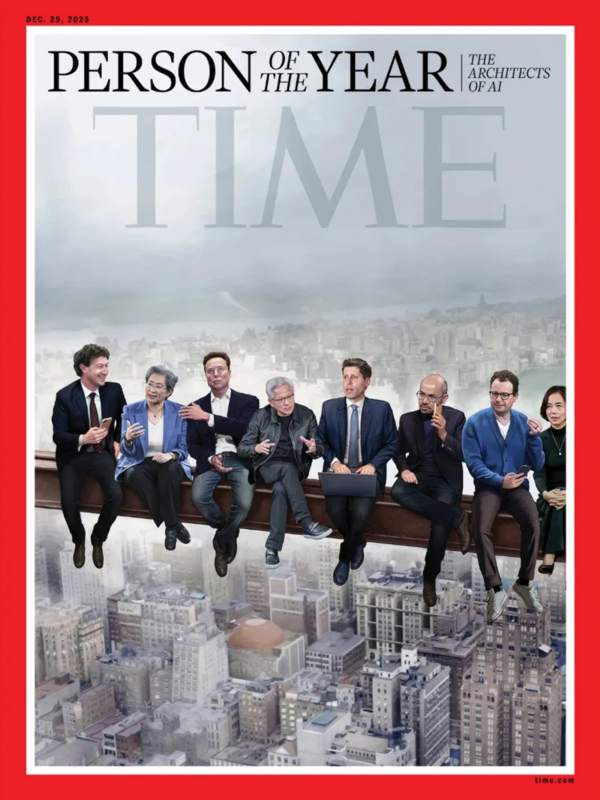
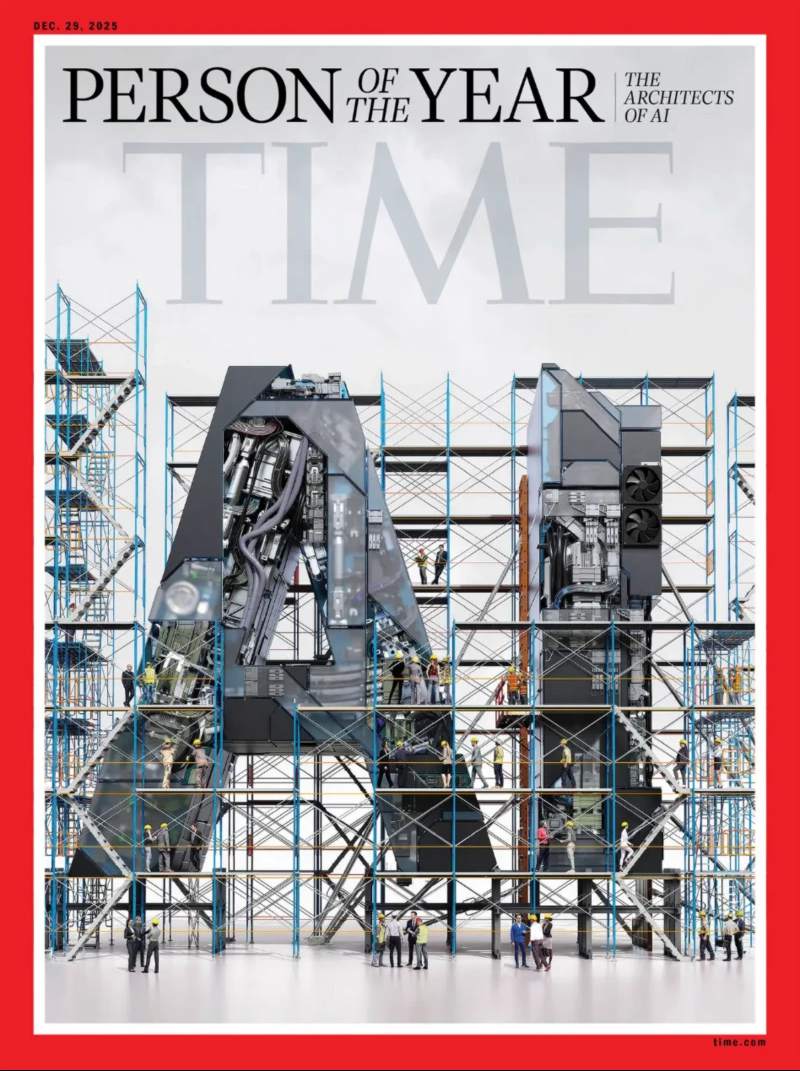
Time Magazine has named the Architects of AI as its 2025 Person of the Year, depicting on its cover eight individuals who are seen to have driven the rapid and consequential development of artificial intelligence. This annual distinction, originally called "Man of the Year," was first introduced in 1927 when it honored the American aviator Charles Lindbergh, who had completed the first solo, non-stop transatlantic flight that year. The title was officially changed from "Man of the Year" to "Person of the Year" in 1999 to be more inclusive. That year the recipient was Amazon CEO, Jeff Bezos. Rather than being about merit or popularity, the Time Person of the Year is fundamentally about influence, selecting someone who: "for better or for worse... has done the most to influence the events of the year." This provides a wide remit and over the years it has been awarded to US Presidents and world leaders - including U.S. Presidents, like Franklin D. Roosevelt and Joe Biden, world leaders, like Winston Churchill and Angela Merkel and even controversial figures who held massive global power (like Joseph Stalin and Adolf Hitler). It has also gone to groups of people, such as, in 2002 "the whistleblowers" Cynthia Cooper, Coleen Rowley, and Sherron Watkins and, in 2005, philanthropists, Bill Gates, Melinda Gates, and Bono. It has gone to classes of unnamed people including Hungarian freedom fighters" (1956) and "U.S. scientists" (1960). In 1982 it went to "The Computer" and the choice of the IBM PC over Steve Job's Apple II was controversial. Whether this year's choice of The Architects of AI will be a controversial is something we may soon discover.
The eight individuals depicted on the magine's cover are from left to right: Mark Zuckerberg (CEO of Meta); The magazine also noted the influence of investors like Masayoshi Son (CEO of SoftBank). If you are wondering what they are doing in on a girder high above New York mid-air, the graphic is a reference to the 1932 photograph, "Lunch atop a Skyscraper." Explaining the choice of individuals, Time's Editor-in-Chief, Sam Jacobs, stated that the Architects of AI were chosen because of their unparalleled influence in making 2025 the year that AI's full potential "roared into view," making it clear that "there will be no turning back or opting out." He elaborated: Whatever the question was, AI was the answer. We saw it accelerate medical research and productivity, and seem to make the impossible possible. It was hard to read or watch anything without being confronted with news about the rapid advancement of a technology and the people driving it. Those stories unleashed a million debates about how disruptive AI would be for our lives. No business leader could talk about the future without invoking the impact of this technological revolution. No parent or teacher could ignore how their teenager or student was using it. His write-up also quotes NVIDIA CEO Jensen Yang: “Every industry needs [AI], every company uses it, and every nation needs to build it. This is the single most impactful technology of our time.” Downsides of the technology are also acknowledged: All this progress comes with trade-offs: The amount of energy required to run these systems drains resources. Jobs are going poof. Misinformation proliferates as AI posts and videos make it harder to determine what’s real. Large-scale cyberattacks are possible without human intervention. TIME is also troubled by economic risks: There is also an extraordinary concentration of power among a handful of business leaders, in a manner that hasn’t been witnessed since the Gilded Age. If the past is prologue, this will result in both significant advancements and greater inequality. AI companies are now lashed to the global economy tighter than ever. It is a gamble of epic proportions, and fears of an economic bubble have grown. Trump captured some of our unease in September when he said: “If something happens, really bad, just blame AI.” I really find it offensive that TIME chooses to laud people who are riding on the backs of the researchers who have done all the hard work. In my opinion only Demis Hassabis and Fei-Fei Li deserve to be there - most of the others wouldn't recognize a reinforcement algorithm or a neural network if it bit them.
Related ArticlesHow Can You Not Be Impressed By AI? If You Sleep Well Tonight You May Not Have Understood The Unreasonable Effectiveness Of GPT-3 To be informed about new articles on I Programmer, sign up for our weekly newsletter, subscribe to the RSS feed and follow us on Twitter, Facebook or Linkedin. 
Comments
or email your comment to: comments@i-programmer.info |
|||
| Last Updated ( Sunday, 14 December 2025 ) |