| LEGO SMART Bricks - Good Or Bad? |
| Written by Lucy Black | |||
| Sunday, 11 January 2026 | |||
|
Announced this week at CES 2026, the SMART Brick is designed to power a new LEGO ecosystem called SMART Play. Will this be user-programmable and provide a replacement for the Mindstorms range of robotics kits that LEGO discontinued? The short answer is No. From a developer's perspective, they are neither user-programmable nor open source. However as the new bricks are "smart" by virtue of responding to RFID tags, the hacker community is already looking at the Bluetooth LE (BrickNet) packets to see if the brick can be fooled or controlled via external scripts that emulate those tags using standard NFC/RFID tools.
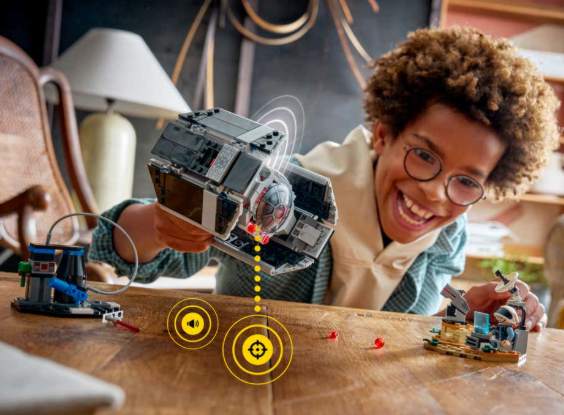
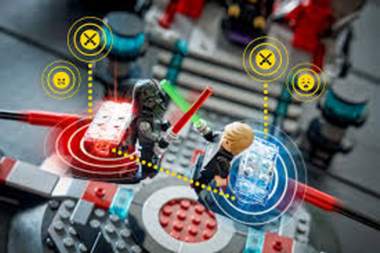
According to the official press release, SMART Play is an innovation that brings LEGO creations to life like never before. Launching on March 1, the first three products will be part of the LEGO® Star Wars™ programme: meaning that a galaxy far, far away…. can now play back! From the press release it is clear that the emphasis shifts away from building a diverse range of creations with LEGO bricks towards playing with pre-designed objects. For example, the Darth Vader’s TIE Fighter building set, pictured below, is a 473-piece set which features a brick-built Rebel Outpost and an Imperial Fueling Station, as well as a SMART Minifigure featuring Darth Vader and a Rebel Fleet Trooper Minifigure. The press release claims: The roar of the twin ion engines comes to life, among other interactive features, with the LEGO SMART Brick. While the use of "SMART" might imply the use of generative AI, this is not the case, it is use of near field communication that gives SMART bricks their special powers. Physically slightly thicker than normal bricks, a SMART brick houses a custom 4.1mm mixed-signal ASIC chip, together with various sensors - a 6-axis accelerometer/gyroscope, light/color sensor, and a "non-listening" microphone (vibration sensor). It also has an internal speaker with an 8-bit real-time synthesizer (no pre-recorded clips). Networking relies on a Bluetooth Low Energy mesh called BrickNet. As well as one or more SMART bricks the kits contain SMART Tags, 2x2 tiles that you build into the model. In the case of the Luke’s Red Five X-Wing set, which comes with 5 tags you place a specific tag in the cockpit area. When the Smart Brick is close enough, it "reads" that tag and knows it is now an X-Wing, triggering the appropriate engine and laser sound logic. There are also SMART Minifigures. These are standard-looking figures but contain a passive chip in the torso. When they get close to the Smart Brick (like sitting in the cockpit or standing next to it), they trigger character-specific dialogue or music. You can, of course, use these SMART components with other LEGO. So, if you put the "TIE Fighter" tag in a LEGO car you built yourself, the car will roar like a starfighter and play the Imperial March when it detects Darth Vader nearby. In this sense, by placing different tags in different locations on your own custom creation, you are essentially "programming" how the sensors react to movement and proximity. LEGO's announcement has proved controversial and split the LEGO community into two camps. Some "play experts" (like the group Fairplay) argue that automated sounds and lights curtail a child's imagination. Instead of a child making appropriate noises, the brick does it for them. Adult Fans of LEGO (AFOLs) are frustrated that the tech adds a significant price premium (sets are roughly $20–$50 more expensive than "dumb" equivalents) for features they likely won't use when the model is sitting on a shelf. There are also privacy concerns. Despite LEGO's assurance that the built-in microphone is a "pressure sensor" (a virtual button) and not a recording device, some parents are wary of any "always-on" microphone in a toy. Personally, as an adult who enjoyed the robotics opportunities provided by Mindstorms, I'm disappointed by how limited the SMART features are. Also I do wonder whether today's pre-teens are as entranced by Darth Vader and Luke Skywalker as their LEGO-building parents.
More InformationIntroducing LEGO® SMART Play™: Bringing your creations to life Related ArticlesAI Builds Lego From The Manual DIY AI To Sort 2 Metric Tons Of Lego To be informed about new articles on I Programmer, sign up for our weekly newsletter, subscribe to the RSS feed and follow us on Facebook or Linkedin. 
Comments
or email your comment to: comments@i-programmer.info |
|||
| Last Updated ( Sunday, 11 January 2026 ) |